Rain hammered the windshield as I fumbled for my camera gear bag in the back seat. My heart pounded. I’d just spotted a double rainbow over the city skyline—one of those rare, blink-and-you-miss-it moments. But as I yanked open my bag, a tangle of straps and loose lens caps greeted me. My 50mm was buried under a mess of batteries and memory cards. By the time I found it, the rainbow had faded. If you’ve ever missed a shot because your camera gear bag let you down, you know the sting. Here’s the part nobody tells you: the right bag isn’t just storage. It’s your mobile command center, your insurance policy, and sometimes, your sanity saver.
Why Your Camera Gear Bag Matters More Than You Think
Let’s break it down. A camera gear bag isn’t just a sack for your camera. It’s the difference between catching the shot and fumbling in frustration. If you shoot weddings, wildlife, or even family vacations, your bag shapes your experience. It protects your gear from rain, dust, and the occasional coffee spill. It keeps your lenses organized, your batteries charged, and your back from screaming after a long day.
But here’s the kicker: most photographers don’t realize how much a camera gear bag affects their workflow until they’ve suffered through the wrong one. I once tried to save money with a cheap bag. The zipper broke on a mountain trail, and my lens rolled into a puddle. Lesson learned—never trust your gear to a bag that can’t handle your life.
What Makes a Great Camera Gear Bag?
If you’ve ever stood in a camera store, overwhelmed by rows of bags, you’re not alone. The options can feel endless. But the best camera gear bag for you depends on your style, your gear, and your body. Here’s what to look for:
- Protection: Thick padding, weather-resistant materials, and sturdy zippers keep your camera safe from bumps and rain.
- Organization: Adjustable dividers, pockets for memory cards, and quick-access panels save you time and stress.
- Comfort: Padded straps, breathable back panels, and weight distribution matter more than you think—especially on long shoots.
- Capacity: Your camera gear bag should fit your camera body, 2-3 lenses, batteries, and a few extras. Don’t go bigger than you need; extra space just invites clutter.
- Style: Backpacks, slings, messengers, and rollers each have pros and cons. Pick what fits your routine, not just what looks cool.
Here’s why: a wedding photographer might need a roller bag for multiple bodies and flashes, while a street photographer might prefer a small sling for stealth and speed. There’s no one-size-fits-all answer.
Types of Camera Gear Bags: Pros and Cons
Backpacks
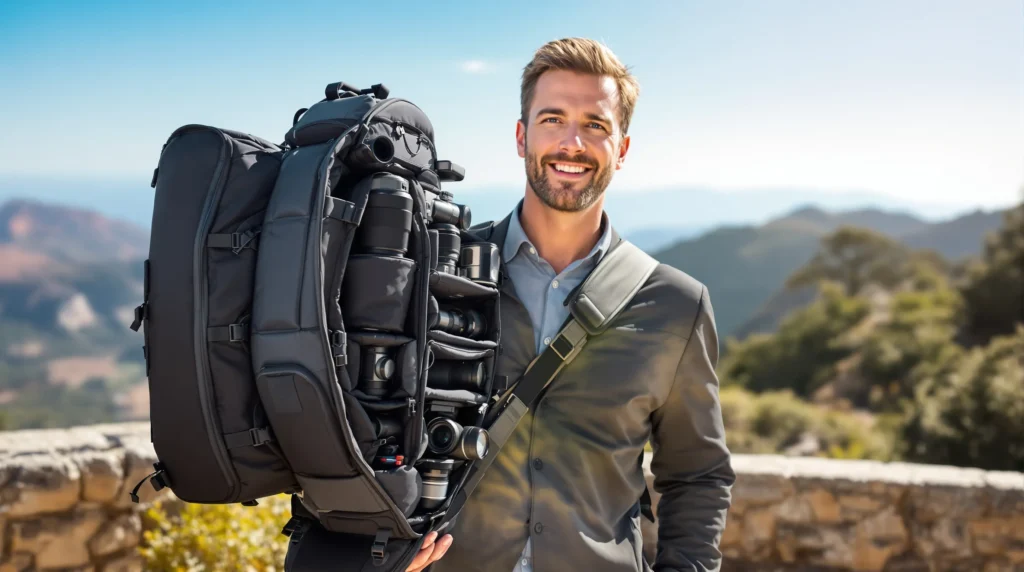
Backpacks balance weight across both shoulders, making them great for long days or hiking. They usually offer lots of space and protection. The downside? You have to take them off to access your gear. If you shoot fast-moving subjects, this can cost you precious seconds.
Sling Bags
Sling bags swing from your back to your front in one motion. They’re perfect for quick lens changes and city shoots. But if you carry heavy gear, one-shoulder weight can get uncomfortable fast.
Messenger Bags
Messenger bags look casual and blend in. They’re easy to access and great for light setups. But they offer less support and protection than backpacks, and your shoulder might ache after a few hours.
Roller Bags
Roller bags are lifesavers for travel or big events. You can pack multiple camera bodies, lenses, and even lighting gear. But stairs, rough terrain, and crowded spaces can turn a roller into a hassle.
What to Pack in Your Camera Gear Bag
Here’s the part nobody tells you: less is more. Overpacking slows you down and makes your bag a pain to carry. Here’s a smart packing list for most shoots:
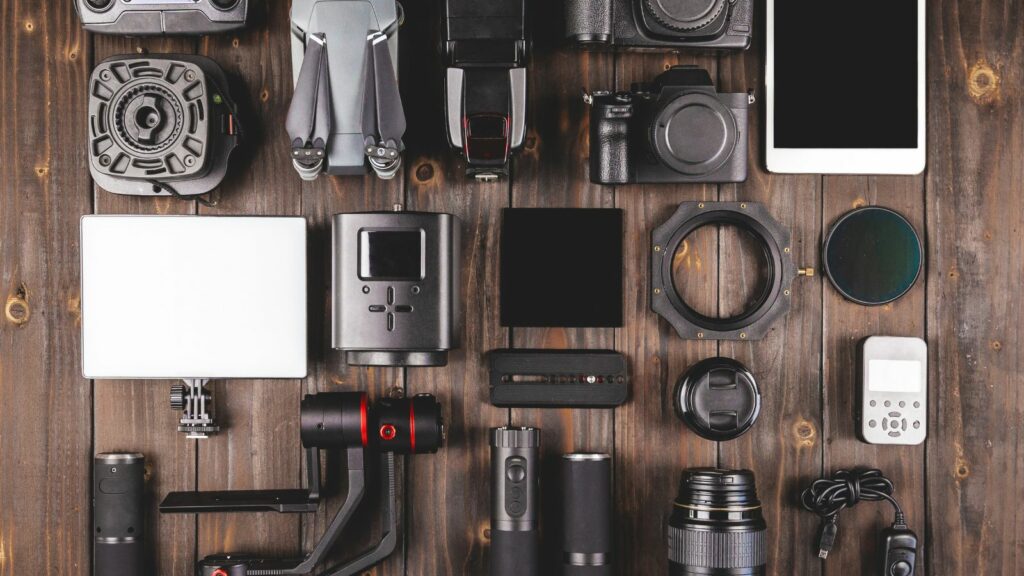
- Camera body (or two, if you’re shooting an event)
- 2-3 lenses (wide, standard, telephoto)
- Extra batteries and charger
- Memory cards in a case
- Lens cleaning cloth and blower
- Notebook and pen (for shot lists or ideas)
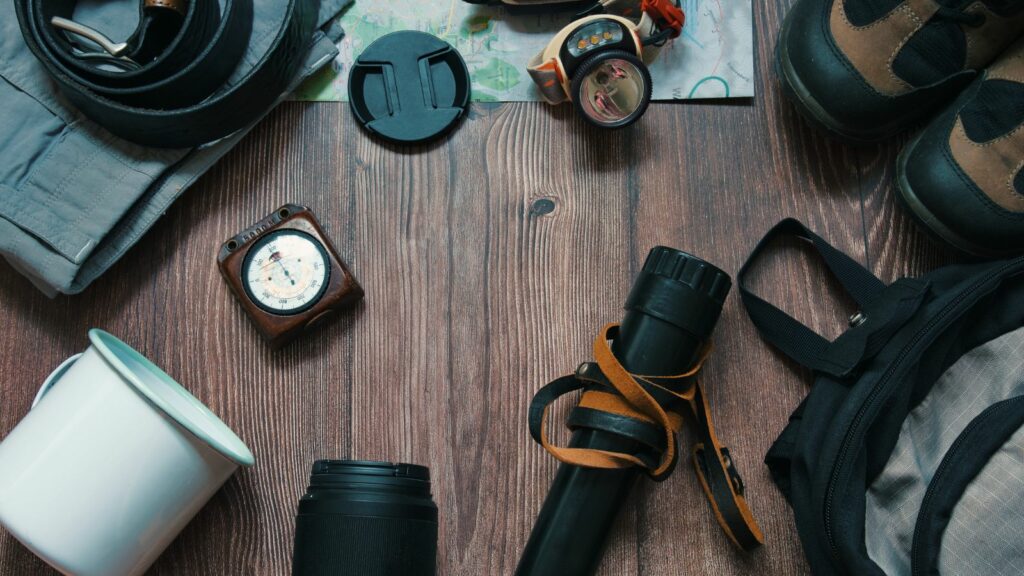
- Rain cover or plastic bag (for sudden weather changes)
- Snacks and water (trust me, you’ll thank yourself)
Don’t forget personal touches. I always stash a lucky coin in my camera gear bag. It’s silly, but it reminds me to stay curious and have fun.
Camera Gear Bag Mistakes I’ve Made (So You Don’t Have To)
I once packed every lens I owned for a portrait session. My bag weighed nearly 30 pounds. By the end of the day, my back was toast, and I’d only used two lenses. Another time, I forgot to zip a side pocket. My favorite filter vanished somewhere between the parking lot and the park. If you’ve ever lost gear or cursed your aching shoulders, you’re not alone.
Here’s what I learned:
- Pack only what you need for the day
- Double-check zippers and closures before you move
- Use color-coded pouches for small items
- Clean out your camera gear bag after every shoot
These small habits save time, money, and headaches.
Who Needs a Camera Gear Bag (And Who Doesn’t)?
If you shoot with a phone or a compact camera, you might not need a dedicated camera gear bag. A small pouch or your regular backpack could work. But if you carry a DSLR, mirrorless camera, or multiple lenses, a camera gear bag is a must. It’s for anyone who values their gear and wants to shoot with less stress.
Travelers, event photographers, and outdoor shooters benefit most. If you only shoot at home or in a studio, you might get by with a shelf or drawer. But for everyone else, a camera gear bag is peace of mind on your shoulder.
How to Choose the Right Camera Gear Bag for You
Start with your gear. Lay it all out. What do you actually use? Next, think about your shooting style. Do you walk a lot? Need to change lenses fast? Travel by plane? Your answers point to the right type of camera gear bag.
Try bags on in person if you can. Load them up and walk around the store. Pay attention to how the straps feel and how easy it is to grab your camera. If you buy online, check return policies. Don’t settle for “good enough.” Your back and your photos deserve better.
Final Thoughts: Your Camera Gear Bag, Your Story
Every scratch, sticker, and stain on my camera gear bag tells a story. The time I shot a surprise proposal in the rain. The wedding where I saved the day with a spare battery. The sunrise hike where I almost lost my lens cap to a curious squirrel. Your bag will collect its own stories—some funny, some frustrating, all part of the adventure.
If you’ve ever struggled with missed shots, lost gear, or aching shoulders, you’re not alone. The right camera gear bag won’t make you a better photographer overnight, but it will make your life easier, your gear safer, and your adventures a little more fun. So choose wisely, pack smart, and get out there. The next great shot is waiting—and this time, you’ll be ready.